

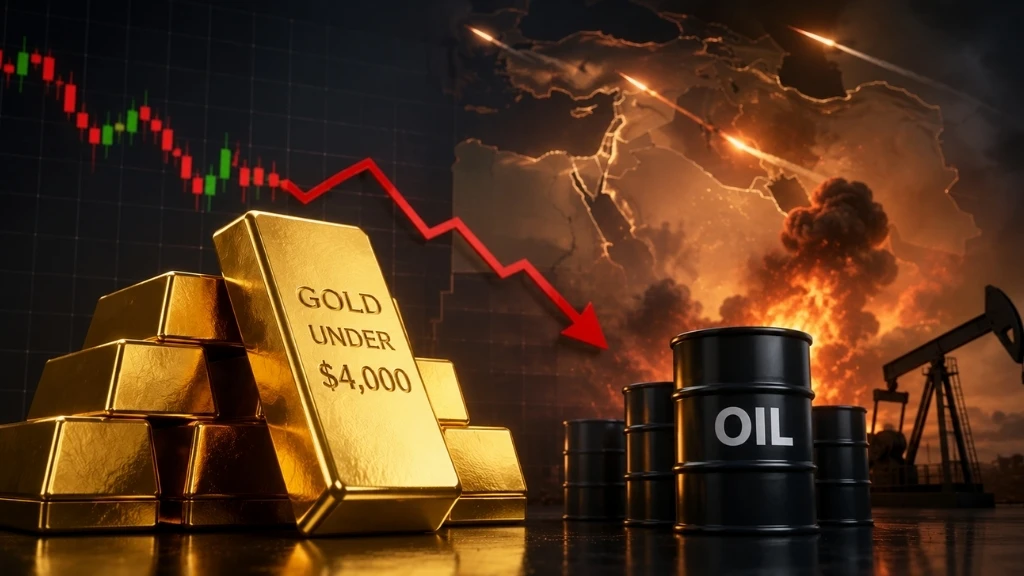
Gold has dipped below the $4,000 mark on Friday, July 17, 2026, as investors wrestled with renewed Middle East tensions and a quick rebound in crude prices that has reignited worries about the U.S. rate hikes. Spot gold traded around US$3,980 an ounce, while the front-month U.S. futures were seen to be trading just under US $3,985 levels. These numbers indicate that the metal is testing investor conviction after a few volatile weeks.
Why Gold Fell Despite the War
Traders were expecting this war between the U.S. and Iran would push safe-haven assets higher. Instead, gold climbed before the recent flare-up and then gave back gains once striking resumed, a pattern that has left some market participants scratching their heads.
Peter Schiff, a devoted gold investor, argued that view is backward: escalation should eventually push gold sharply higher as risk premia and inflation expectations build. He put a bold longer-term target on the table well above current levels, suggesting traders who flag the metal as “priced for peace” may be caught off guard.
Oil’s Quick Rebound Matters
Oil’s movements are central to the story. In June, crude plunged roughly 30% on hopes that the regional conflict might ease, cooling headline inflation and easing some pressure on central banks. However, July has reversed part of this drop, with oil up roughly 20% so far as fresh strikes and military activity continued. This bounce has prompted some strategists to warn that the initial “peace rally” in markets was fragile. If oil keeps climbing, inflation expectations and the odds of further rate rises will rise, too.
Markets Caught Between Headlines and Data
This tug-of-war shows up in weekly market moves. Gold posted its largest weekly percentage decline since early June, while silver and other precious metals also headed for losses. Equities have been sensitive to announcements of de-escalation; historical episodes show that market-friendly headlines can spark fast rallies. But with strikes continuing night after night, some analysts question how sustainable those stock gains can be. A weaker market, they argue, strengthens the negotiating position of regional actors, making a durable peace less likely and volatility more persistent.
Miners Look Like a Bargain, For Now
An important side effect: gold mining stocks are now historically cheap relative to the S&P 500. This valuation gap has widened to the point where miners look like an “uncomfortable accumulation” opportunity for longer-term investors who believe in the metal’s fundamentals. While the price of physical gold has been range-bound or lower, the mining stocks have underperformed, offering upside should the macro environment turn into one of higher inflation or risk aversion.
What Investors Should Watch
Oil Prices: A sustained climb would weigh on inflation expectations and could increase rate-hike odds.
Geopolitical Headlines: Claims of ceasefires or announcements of peace have triggered rallies in the past; the durability of those claims matters more than the headlines themselves.
Central-bank signals: Any suggestion that policymakers will push rates higher because of rising energy costs will affect both equities and precious metals.
Miners’ fundamentals: Production, costs and balance-sheet strength will determine which mining stocks are worth buying if gold resumes a strong uptrend.
Bottom Line
Markets are grappling with these difficult combinations of news and figures. The rapid recovery of oil prices in July serves as a reminder that politics may bring inflation back into play. Currently, gold remains under $4,000 with mixed signs, while value seekers are looking at the discount mining stocks; on the other hand, market players discuss whether the upcoming price movement of gold will be a spike or decline. However that might be, the combination of geopolitical threats, oil, and monetary policy will continue to cause tension in the coming weeks.