
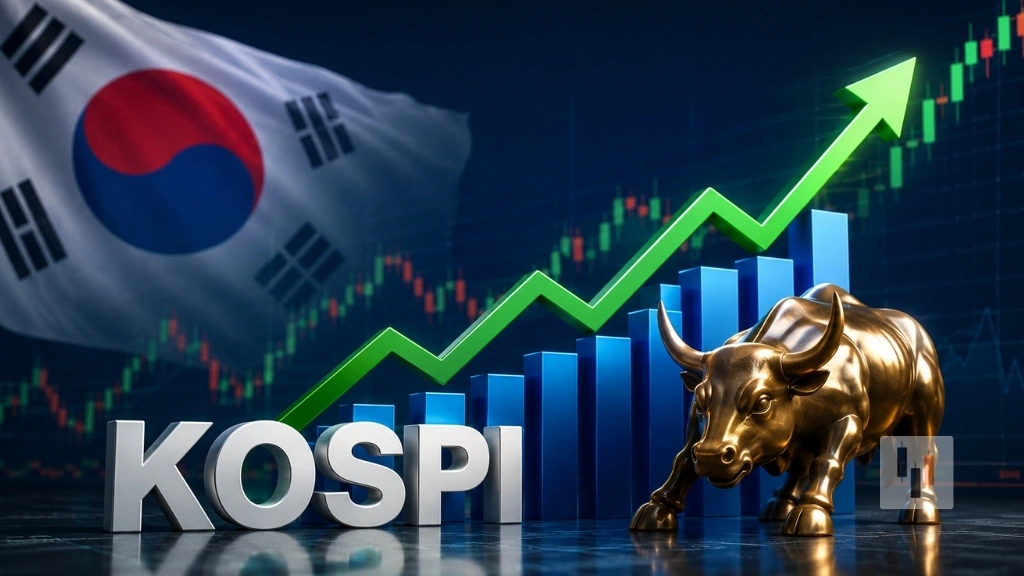
South Korea’s KOSPI recovered after July’s major rout, returning to bull-market territory as investors moved into the country’s biggest semiconductor stocks. The index jumped 3.56% to close at 6,813 on Wednesday, hitting a three-week high as AI and chip-related shares rallied. Since its late-July low below 5,300, the KOSPI has rebounded nearly 30%. The recovery has been driven mostly by Samsung Electronics and SK Hynix, with Samsung gaining 40%, and SK Hynix gaining over 30% since their July lows.
How fast the market recovered has people questioning whether this signals a new, more stable bull run or just a rebound from July’s sell-off caused by forced selling and heavy use of leverage. The KOSPI hit a record 9,100 in June, having rallied hard since April 2025, but then it fell more than 40%. Margin calls and 2x leveraged ETFs played a big role in that drop. More than $2 trillion vanished from Korean markets during the crash as assets in leveraged ETFs sank from $53 billion to about $25 billion.
A Sharp Recovery After the July Rout
This rebound came as pressure from leveraged investors eased. Regulators tightened rules, and brokerages moved back to normal on margin and risk standards, which helped cool the forced selling that fueled the July drop. With that pressure lifting, buyers started coming back into the market. Foreign investors are coming back, too. On Wednesday, global funds bought $2 billion worth of KOSPI shares, while retail investors were net sellers. That influx of foreign money gave the KOSPI another lift after the heavy sell-off earlier.
The rally also got a boost from steady U.S. inflation and strong tech earnings out of the U.S., which restored some faith in ongoing demand for AI infrastructure and memory chips. Reports that Singapore’s Temasek may be weighing investments in Samsung and SK Hynix has further added to the positive sentiment. South Korea plans to fast-track approvals for semiconductor and AI megaprojects, adding another potential support for the sector.
Why Samsung and SK Hynix Still Drive the KOSPI
Samsung Electronics and SK Hynix are still the key drivers of the KOSPI. Together, they make up over 55% of the index, meaning the whole market relies heavily on global semiconductor and AI spending trends. Market strategists say strong semiconductor earnings explain a lot of the recovery. Peter Kim, KB Securities’ global investment strategy chief, said the AI rally and solid earnings remained in place during the sell-off. In his view, it’s not so much that fundamentals have improved, but that the market is finally reflecting them again.
Plenty of analysts urge caution, though. Phillip Wool, head of research at Rayliant Global Advisors, said Korea’s market is so closely linked to the AI hardware trade that the rebound looks like a mix of forced selling ending, buyers returning, and the fear of missing out. Strong Big Tech results have boosted expectations for AI spending and higher growth outlooks for Korean hardware companies. But there’s risk in this concentration. Any sign that global AI spending is slowing could hit Korean stocks fast. Softer capital spending guidance from major U.S. tech companies, weaker token pricing, or renewed worries about Fed tightening could all trigger another sell-off.
Billy Leung at Global X ETFs said Korea’s corporate-governance reforms and the “Value-Up” push have helped reduce the long running “Korea discount”, the tendency for Korean companies to trade at lower valuations than their global peers. Still, he pointed to high retail investor activity, a market dominated by a handful of companies, and ambitious targets as signs that things may be getting late in the cycle.
Looking at technicals, the KOSPI is facing some important levels. After testing resistance at 6,820 (the EMA 100), investors took profits before the index recovered support at 6,800 (a Fibonacci retracement level). If it can hold above 6,800, the way toward 7,000 opens up, but if things soften, it could settle closer to 6,600.
Jung In Yun from Fibonacci Asset Management Global urges caution about calling this a whole new bull market. He sees the rebound as part technical recovery from forced selling, part genuine return to stability. His base case is that the broader bull trend will keep going, supported by semiconductor earnings and better risk appetite, but he expects the rise to be slower and uneven after such a rapid jump.