
Key Highlights:
- Aluminium futures settled 1.43% lower at Rs. 326.55 as expectations of higher global supply in 2027 weighed on prices.
- The estimated loss of Middle Eastern aluminium production has been revised down to less than 2 million tonnes from earlier estimates of 3–3.5 million tonnes.
- A restart at Emirates Global Aluminium, record Chinese output and expanding Indonesian smelting capacity are adding to expectations of stronger supply, although falling inventories and high alumina costs could limit the increase.
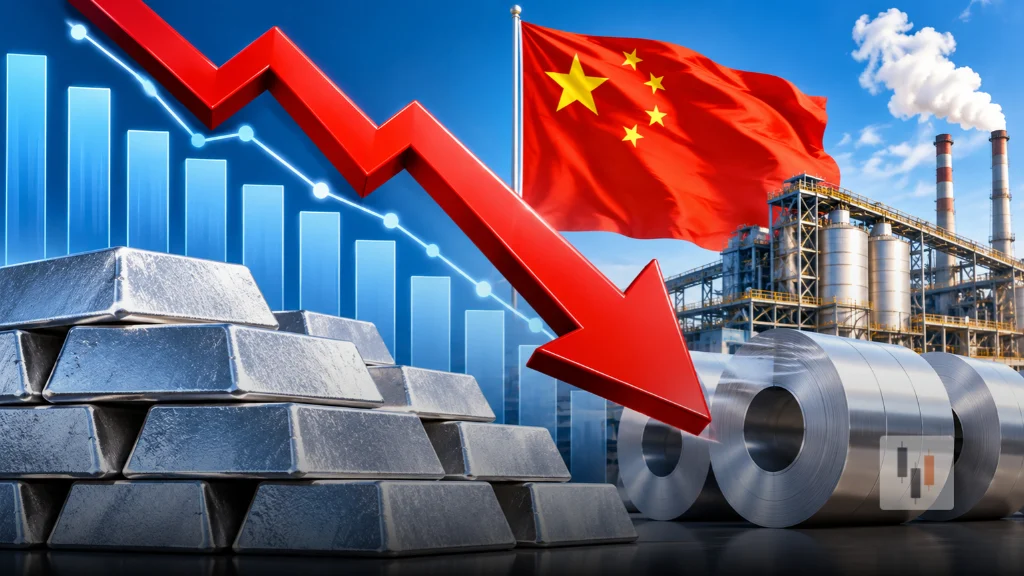
Aluminum prices plunged as traders evaluated the global supply perspective and began factoring in the probability of a market surplus in 2027. The metal had previously drawn support from production disruptions in the Middle East, which raised concerns about availability. However, estimates of lost output have since revised lower, while production recovery and capacity expansion across major producing regions could bring more metal into the market.
The evolving perspective has encouraged traders to reduce bullish positions, adding to the downward pressure on prices. Despite the fall, some supply-side constraints remain, demonstrating that the market may not move into an immediate surplus.
Why Are Aluminium Prices Falling as Global Supply Improves?
Aluminum settled 1.43% lower at 326.55 rupees, as expectations of stronger global feasibility weighed on the market. Prior concerns about Middle Eastern production losses had supported prices, but the estimated disruption has become smaller than initially anticipated. The loss of aluminum output from the Middle East was previously estimated at 3-3.5 million tonnes. Those estimates have now been revised down to less than 2 million tonnes.
A smaller production drawback means the market could receive more metal than traders had expected, reducing concerns about a prolonged supply squeeze. The recovery at Emirates Global Aluminum (EGA) is another factor influencing the perspective. The company has restarted 631 of the 1,262 reduction cells at its Al Taweelah facility, restoring approximately half of its capacity. Full production is expected by the fourth quarter of 2027.
The slow restart could return a significant volume of aluminum to global markets as operations recover. China’s production is also contributing to expectations of higher supply. The country produced a record 11.84 million tonnes of aluminum between July and September, marking a 2.2% increase year after year. September production alone rose 3.1% to 3.91 million tonnes.
Given China’s position as the world’s largest aluminum producer, sustained output at these levels could add to global availability. Meanwhile, Indonesia’s expanding smelting capacity could provide another source of extra supply.
Could a 2027 Aluminium Surplus Put Further Pressure on Prices?
The prospect of a market revenue is becoming a key problem for aluminium traders. A surplus occurs when production surpasses consumption, leaving more metal than buys require. If supply passes demand, producers may have to lower prices to sell the extra output. This expectation can influence future prices before the surplus actually develops. Traders tend to adjust their positions based on expected market conditions, meaning the probability of higher supply in 2027 is already weighing on current prices.
However, multiple factors could restrict the speed and magnitude of the expected supply increase. Inventories monitored by the Shanghai Futures Exchange fell 10.3% week on week, signalling that nearby physical availability remains relatively tight. High alumina import costs could also delay production restarts and planned capacity expansions, potentially limiting how quickly additional aluminium reaches the market.
Global primary aluminium production also remained lower year on year in September, declining to 6.014 million tonnes from 6.10 million tonnes. This indicates that, despite stronger output in China and the expected recovery in the Middle East, the global production sphere is not unequivocally increasing. Trading activity added another layer of pressure. The decline was accompanied by long unwinding, indicating that traders who had previously taken bullish positions were closing them. Open interest fell 0.53% to 4,283 contracts as aluminium prices dropped by Rs. 4.75.
From a technical point, Rs 323 is the immediate support level, followed by Rs 320. On the upside, resistance is placed at Rs 331. A sustained move above that level could open the way towards Rs 335.50. The outlook for aluminium will rely on how swiftly disrupted production returns, how much new capacity comes online and whether consumption can absorb the additional metal. While the probability of a 2027 gain is looming on prices, tighter inventories and elevated production costs remain important countervailing factors.
Also Read: UBS Says Broad Commodity Exposure Matters in a Volatile Market