
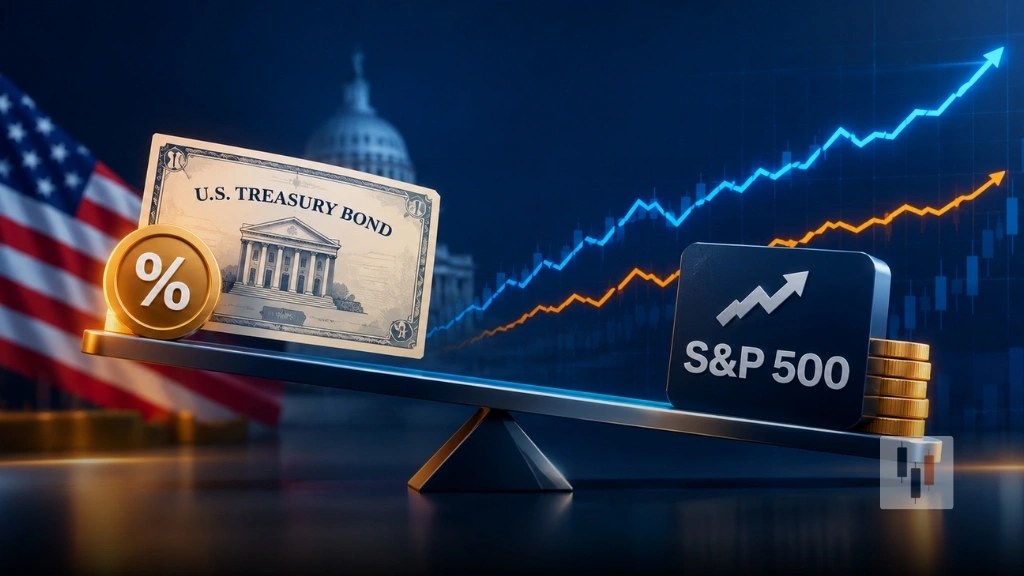
The U.S. bond market is going through a big change that is making investors rethink how they balance stocks and bonds. The 10-year US Treasury yield has moved above 5%, and bonds have not looked this attractive against stocks in about 25 years. Meanwhile, the S&P 500’s earnings yield, which is just the inverse of its price-to-earnings ratio, has dropped below the 10 year Treasury yield. Investors can now earn a competitive return from government bonds without taking on the same risk as stocks.
This shift really matters because it is challenging a pattern that has dominated the markets for about two decades. After the global financial crisis, low inflation, low interest rates, and government support helped lift both bonds and stocks, but stocks usually gave better returns. Now, that situation has changed. Yale economist Robert Shiller’s CAPE model, specifically the cyclically adjusted excess CAPE yield, reads 0.96, against a long-run average of 2.52, implying the S&P 500 beats bonds by only about 1% a year over the next decade. That is adding to concerns about how U.S. stocks will perform in the future.
Why The 10-Year Treasury Yield Now Beats Stocks
With the 10 year Treasury yield rising above 5%, the balance between stocks and bonds has really shifted. In the past, stocks usually traded at a premium compared to bonds because companies could grow their earnings. Investors were fine with lower stock earnings yields because they hoped for more growth. But after the global financial crisis, things changed. Stock earnings yields remained above bond yields, making stocks more attractive in terms of returns. Five years ago the same 10-year yield was 1.5% and the Fed funds rate was zero, while stocks promised bigger growth.
That is not how things look today. The gap between bond and stock yields is now in the best territory for bonds in about 25 years. Even though the S&P 500’s price-to-earnings ratio has dropped as stocks have been adjusting to higher bond yields, the stock market is feeling the pressure from these higher long term interest rates.
When Treasury yields go up, investors expect more out of stocks, too. That means companies have to prove their earnings are worth the risk. If company profits disappoint, the solid returns from bonds might start looking a lot better than the potential from stocks. U.S. stocks are still close to record highs, and the economy has been surprisingly strong. In fact, the high yields on long term Treasuries partly reflect that strength. The economy’s resilience is helping support both corporate earnings and stock prices, even as borrowing gets more expensive.
What Shiller’s Excess CAPE Yield Says About Returns
These valuation concerns show up in Robert Shiller’s CAPE model, too. His model compares the cyclically adjusted real earnings yield of stocks to the 10 year Treasury yield, aiming to estimate how much stocks should outperform bonds over the next decade. Right now, the model says the S&P 500 might only beat bonds by about 1% a year. That is not much, it just shows how much the investment world has changed.
Of course, the model is not perfect. In the last few years, it has not predicted the market as well, stocks actually outperformed what the model suggested. Government intervention in financial markets is one proposed explanation for this difference. Meanwhile, the bond market itself has changed a lot.
How Long-Bond Investors Got Caught By The Rate Shift
Investors who placed big bets on long term bonds back when yields were low have lost a lot of money. The TLT ETF, which tracks 20 year plus U.S. Treasury bonds, is a good example of the struggles for long term bond investors.
Looking back, the long bond rally after the financial crisis came during a decade of low inflation and lots of government support. When bond prices surged during the pandemic, it started to look a lot like an asset bubble. Now that the 10 year Treasury yield is above 5%, people are rethinking the value of bonds. The end of the previous inverted yield curve logic and the reversal of the stock bond return relationship are forcing investors to examine asset allocation more closely. The big question now is not just whether stocks can keep growing, but if that growth is strong enough to make them better than bonds, which are offering much higher yields.