
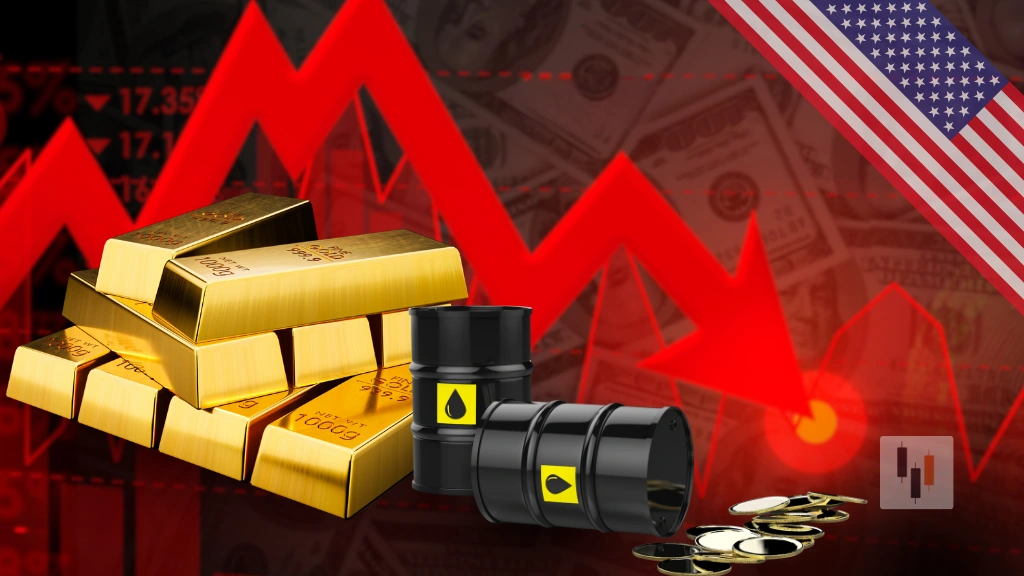
Gold prices fell more than 2% on Monday as higher oil prices added to inflation concerns and strengthened expectations for another U.S. Federal Reserve interest-rate hike. Spot gold fell 2.1% to $4,198.10 per ounce as of 0357 GMT, and extended losses to about 3% later in the session, putting it on track for its biggest daily decline since September 1. U.S. gold futures also fell 2.1% to $4,231. The decline came as investors assessed higher energy costs, elevated Treasury yields and the possibility of tighter monetary policy. Oil prices moved higher amid uncertainty around energy supplies, while markets prepared for a week of U.S. labor-market and inflation data. The combination has put pressure on gold because higher interest rates increase the opportunity cost of holding the non-yielding metal.
Why Higher Oil Prices Are Pushing Gold Lower
Oil prices rose as uncertainty over flows through the Strait of Hormuz kept energy markets focused on supply risks. The move followed Trump’s rejection on Saturday of an Iranian offer to reopen the waterway within seven days, conditional on the US lifting its naval blockade and oil sanctions and releasing frozen assets, while Iran said diplomacy was the way to resolve the conflict. Higher oil prices can add to inflation by increasing costs across the economy, including transportation and production. That can influence expectations for monetary policy because persistent inflation may make it harder for the Federal Reserve to lower borrowing costs.
Gold remained under pressure as elevated oil prices and expectations for further Fed increases kept yields and the dollar in focus. Gold does not generate interest income, so higher rates and Treasury yields can make the metal less attractive relative to interest-bearing assets. Rising yields can therefore weigh on gold even when inflation and geopolitical uncertainty would normally support demand for the metal.
How Far Silver, Platinum And Palladium Fell
Gold traded around $4,197 as oil prices and Treasury yields added pressure, while markets continued to assess the possibility of another rate increase. The decline was not limited to gold. Spot silver fell 3.4% to $62.08 an ounce in early trading, before dropping closer to 4.7%, platinum declined 2.7% to $1,730.78 and palladium dropped 2.8% to $1,231.46. The latest move leaves gold sensitive to several factors at once, with oil prices affecting inflation expectations and bond yields influencing the relative appeal of holding a non-yielding asset.
What October Fed Rate-Hike Odds Mean For Gold
Expectations for another Federal Reserve rate increase have become another source of pressure for gold. The central bank raised its target interest-rate range by 25 basis points earlier this month to between 3.75% and 4%. Money markets priced about a 66% chance of a hike at the October 27-28 meeting, up from about 58% a week earlier and 9% a month ago. That has increased the importance of incoming economic data, which could affect expectations for the Fed’s next policy decision.
Investors are due to receive several U.S. labor-market and inflation indicators this week, including job openings, the ADP employment report, the Personal Consumption Expenditures price index and nonfarm payrolls. Stronger-than-expected employment or inflation figures could put further upward pressure on bond yields and reinforce expectations for higher interest rates. Weaker data could have the opposite effect by changing how investors assess the Fed’s policy path.
Cleveland Fed President Beth Hammack, a voting member of the FOMC this year also said on Friday that persistently high inflation remained a concern. Her comments came as policymakers continued to assess how long interest rates may need to remain elevated. For gold, the immediate focus is therefore on how incoming U.S. data affects expectations for interest rates and Treasury yields. Oil prices and developments around the Strait of Hormuz are also likely to remain relevant because changes in energy costs can influence inflation expectations.