Key Takeaways
- India’s equity market recovery has improved the earnings outlook for stock exchanges and brokerage firms.
- Capital-market stocks have gained 14% this month, outperforming the Nifty 50’s 9.7% rise.
- Higher trading activity has supported volumes at the National Stock Exchange and BSE.
- Potential changes to futures and options rules remain a concern for market firms.
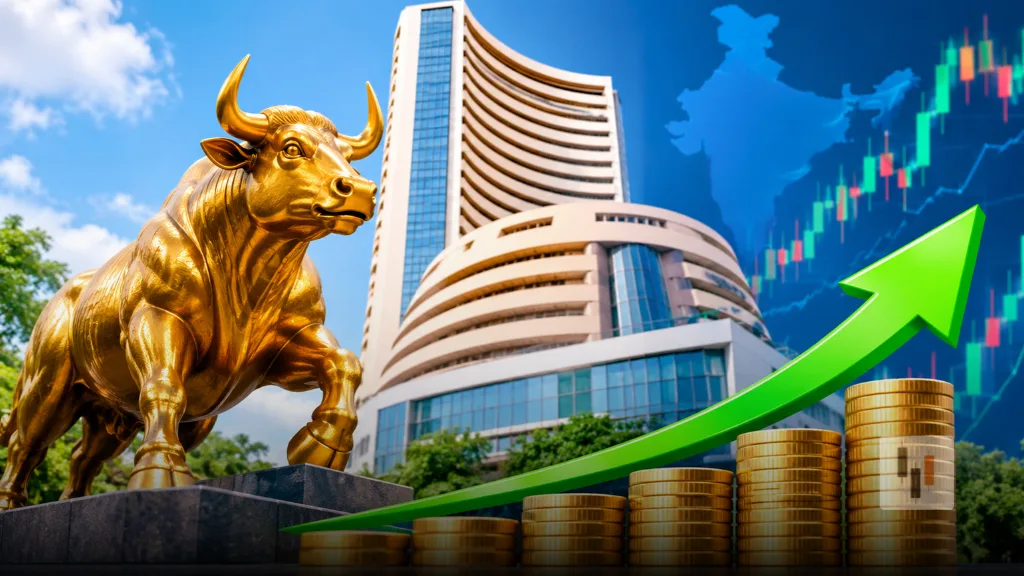
India’s $5.4 trillion equity market has recovered since late October, improving the outlook for stock exchanges and brokerage firms as trading activity picks up. A group of capital-market stocks has gained 14% this month, compared with a 9.7% rise in the Nifty 50. The gains have been led by brokerages Angel One and Motilal Oswal Financial Services. The recovery follows a period of weaker activity after changes to the market’s closing-auction framework affected trading volumes. Lower crude oil prices and a shift in investor funds away from global artificial intelligence stocks have also supported the recent rebound.
Rising Trading Activity Improves Earnings Outlook For Indian Exchanges And Brokerages
The National Stock Exchange of India (NSE) recorded its highest average daily notional turnover in four months during October, while trading volumes at the Bombay Stock Exchange (BSE) increased by around 50%. The NSE India Volatility Index has also climbed approximately 60% from its September low. Higher volatility can encourage activity in derivatives markets as traders adjust positions in response to changing prices.
The improvement has also been reflected in the share prices of companies linked to India’s capital markets. A group of these stocks has risen 14% this month, ahead of the Nifty 50’s 9.7% gain. Angel One and Motilal Oswal Financial Services have been among the leading contributors to the sector’s performance. Lower crude oil prices and funds moving away from a weakening global AI trade have supported the broader market recovery since late October. Foreign investment has also contributed to the rally. Overseas investors had purchased $6.43 billion worth of Indian shares in November, marking their largest monthly inflow in more than two years. The Nifty 50 and Sensex were both up around 10% for the month.
Daniel Takieddine, co-founder and CEO of Sky Links Capital Group, said capital-market stocks could have further room to rise as trading activity recovers. The outlook, however, depends on whether the increase in market participation continues.
SEBI’s Revised Closing-Auction Rules Could Support Trading Volumes
Changes to the Securities and Exchange Board of India’s (SEBI) closing-auction framework have also contributed to improving market sentiment. The regulator reviewed parts of the framework after its introduction affected trading activity and raised concerns among market participants. SEBI revised provisions covering the Closing Auction Session, market timings and the settlement methodology for derivatives contracts.
The revisions include changes to how settlement prices for expiring derivatives contracts are determined. The previous framework had linked these prices to closing prices established through the auction process. Under the revised approach, exchanges will provide relevant volume-weighted average prices and traded quantities to clearing corporations for derivatives settlement. Trading activity reportedly began recovering as market participants anticipated the changes. The earlier framework had been associated with lower volumes, particularly in derivatives trading. A return to the revised settlement methodology could help exchanges and brokers recover some of the activity lost during that period.
However, the changes do not remove all regulatory uncertainty for the sector. SEBI could still consider further adjustments to futures and options rules as it continues efforts to protect retail investors. India’s head at BofA Global Research, identified potential changes to futures and options regulations as a near-term challenge for capital-market firms. Such measures could affect trading activity and the earnings outlook for exchanges and brokerages, depending on their scope.
Also read: Michael Burry Flags Risks To Nvidia’s Growth And Profit Margins