
Key Highlights:
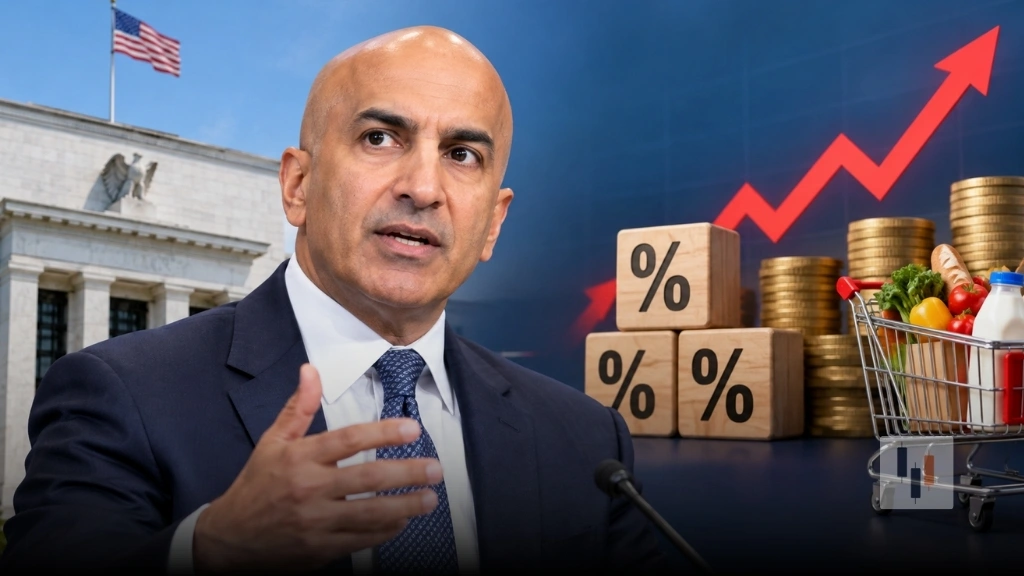
- Minneapolis Fed President Neel Kashkari said inflation remains on the rise and expects the Fed to raise interest rates again depending on economic conditions.
- The Fed raised its overnight target rate by 25 basis points in September to a range of 3.75% to 4%, while officials pencilled in another hike before year-end.
- Kashkari said he is paying attention to market indications suggesting tighter policy may be needed but does not want to follow those signals blindly.
Federal Reserve Bank of Minneapolis President Neel Kashkari said the U.S. central bank may need to increase interest rates again. This is while the policymakers continue working to bring inflation back to its 2% target. Speaking at the Council on Foreign Relations in New York on Wednesday, Kashkari said the latest inflation data had not changed his perspective that price pressures remain at a rise.
His remarks come after the Federal Reserve raised its overnight target rate by a quarter percentage point at its September 15th meeting, while officials have signaled another increase could come before the year end. Financial markets have recently adjusted expectations for the speed of further tightening, subsequent to comments from New York Fed President John Williams.
Why Does Kashkari Expect the Fed Could Raise Rates Again?
Kashkari said his assessment of inflation remains unfazed, describing current inflation as on the rise. He said monetary policy can bring inflation back to the Federal Reserve’s target, pointing to his confidence that the central bank’s mechanisms can decrease price pressures. The remarks come after a tenure in which U.S. inflation has remained above the Fed’s 2% target for more than five consecutive years. Kashkari reflected on the consistency of elevated inflation. He said that earlier in his Fed career he would have never expected the economy to experience a long period of inflation.
At the September Federal Open Market Committee meeting, policymakers raised the overnight target by 25 basis points. This is the round 3.75 to 4%. Officers hinted through their projections that another rise could take place before the year end. However, the prospect for extra tightening is reliant on how economic conditions develop. Kashkari described the rate projections from the September meeting as a snapshot based on the context available to policymakers at that time.
That leaves incoming inflation and employment and broader economic data important to the Fed’s decisions ahead. The central bank has also indicated continued economic growth and stability in the labor market as factors giving policymakers room to focus on inflation. The prospect of additional rate increases also matters for financial markets because changes in expectations of monetary policy can affect borrowing costs, bond yields and other asset prices.
How Is the Fed Reading Market Signals on Future Rate Hikes?
Kashkari said he is observing financial markets for indications about whether monetary policy may be needed. He does not intend to follow those signals as a directive. His remarks followed comments from New York Fed President John Williams, who said Tuesday that he expects a rate hike before the end of the year. He does not see an immediate need to form policy after the September hike. Those comments contributed to a shift lower in market expectations for the pace of future rate increases. Kashkari said market signals indicate that monetary policy may need to become sterner than officials expect.
He also advised that markets incorporate different factors, meaning policymakers need to evaluate those signals alongside economic data rather than following them. Bond yields are also on the rise as the Federal Reserve has tightened policy. Higher yields can, in theory, provide extra restraint to the economy and support efforts to reduce inflation. Fed officials have attributed some of the increase in yields to optimism surrounding the economic perspective, competition for capital linked to strong artificial intelligence investment, and uncertainty around the Middle East conflict.
This creates a complicated backdrop for monetary policy. The Fed is trying to bring inflation down while economic growth remains robust and the labor market continues to slow gradually. Those conditions give policymakers a chance to keep their focus on inflation, but they also mean officials must weigh the potential effects of tighter policy on economic activity. For investors, Kashkari’s comments reinforce the importance of upcoming economic data and changing expectations around the Fed’s route. While another rise remains part of the policymakers’ current perspective, the final decision will depend on how inflation and the broader economy develop.