Key Takeaways
- The ECB is widely expected to keep its deposit rate at 2.5% at the October 29 meeting.
- Christine Lagarde plans to leave the presidency on February 7, 2027, ahead of schedule.
- Rising French government bond yields are increasing borrowing costs and adding pressure to the euro zone outlook.
- Higher energy prices could keep inflation concerns alive and leave another ECB rate increase on the table.
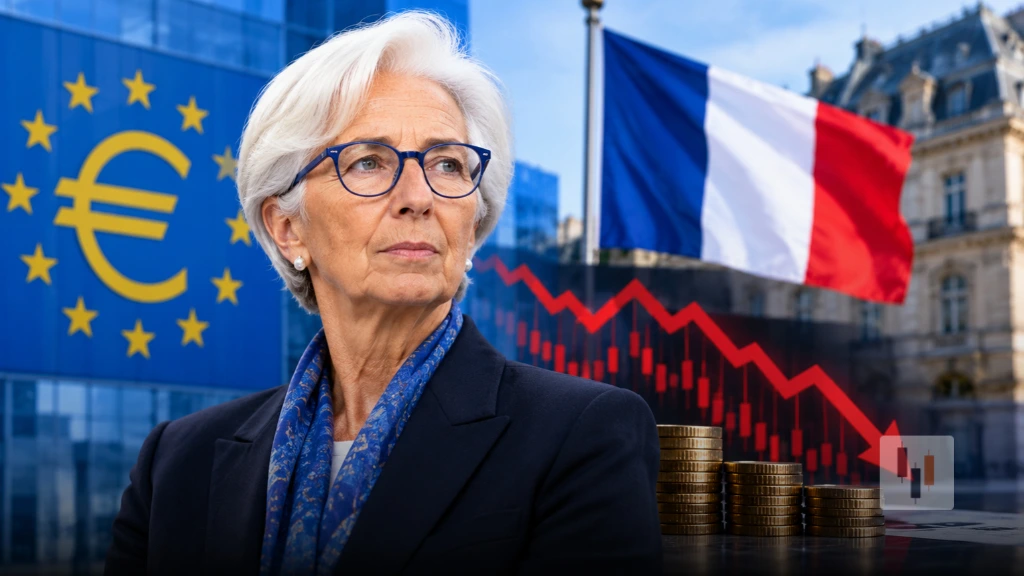
The European Central Bank faces a difficult balancing act as it prepares to announce its latest interest-rate decision, with rising French borrowing costs and Christine Lagarde’s planned early departure drawing attention to the euro zone’s economic outlook. Lagarde is set to leave the ECB presidency on February 7, 2027, several months before her scheduled term ends in October. Meanwhile, policymakers are widely expected to keep the deposit rate at 2.5% at the October 29 meeting, although another increase in the coming months remains possible. The central bank is trying to contain inflation linked to higher energy prices while government bond yields are making borrowing more expensive across the region. These pressures could complicate its next policy moves, particularly if inflation remains elevated while economic growth faces further headwinds.
French Bond Yields Add To The ECB’s Policy Challenge
The ECB’s immediate challenge is to balance inflation risks against tighter financial conditions across the euro zone. Higher energy prices, linked to the conflict involving Iran, have added to concerns that inflation could remain above the central bank’s target for longer than expected. Policymakers have already raised interest rates twice since June, and markets are watching for signals about whether another increase could follow as early as December. The ECB is expected to hold its deposit rate at 2.5% while keeping the possibility of further tightening open. Higher energy costs could feed into other prices and wages, making inflation harder to bring under control.
French government bonds have come under pressure as investors worry about the country’s rising debt, budget deficit and political uncertainty ahead of the 2027 election. The problem extends beyond France. Bond markets across Europe have been reacting to uncertainty over inflation, government spending and the path of interest rates. Some investors have also pointed to hedge-fund activity and leveraged trades as possible factors behind the recent swings in bond prices.
For the ECB, the concern is that higher borrowing costs could slow economic activity even as policymakers try to contain inflation. The bank has tools to respond if financial-market stress threatens to disrupt monetary policy, but it has not indicated that immediate intervention in French bond markets is necessary. Its next steps will depend on how inflation, economic conditions and market pressure develop.
Lagarde’s Early Departure Puts ECB Succession In Focus
An earlier exit would give European Union leaders more time to select a successor before France’s presidential election, expected in the spring of 2027. The timing matters because the ECB president plays a central role in setting the tone of monetary policy and communicating decisions to financial markets. Leadership uncertainty does not automatically change the bank’s policy direction, but investors will be watching whether the transition affects expectations for future interest rates. Former Dutch central bank governor Klaas Knot and former Spanish central bank governor Pablo Hernández de Cos have emerged as potential successors, according to Reuters. The final appointment will be a decision for European leaders, and neither candidate should be treated as confirmed.
Lagarde’s departure also comes as the ECB confronts competing risks. Keeping rates high for longer could help prevent energy-driven price increases from spreading through the economy, but it could also put further pressure on households and businesses already facing higher borrowing costs. Cutting rates too soon, meanwhile, could make it harder to bring inflation back under control if energy prices continue to rise. Markets will therefore be looking beyond the October 29 rate announcement to the central bank’s guidance on what comes next. Any indication that another rate increase is approaching could influence bond yields, currency markets and borrowing expectations across the euro zone.