
Key Takeaways
- Spot gold fell 0.3% to $4,127.87 as the dollar strengthened and Treasury yields remained elevated.
- Higher bond yields can make gold less attractive because the metal does not provide regular interest income.
- September’s weaker employment figures have reduced expectations of an October Federal Reserve rate hike.
- Investors are waiting for the Fed’s meeting minutes and fresh economic data for further rate signals.
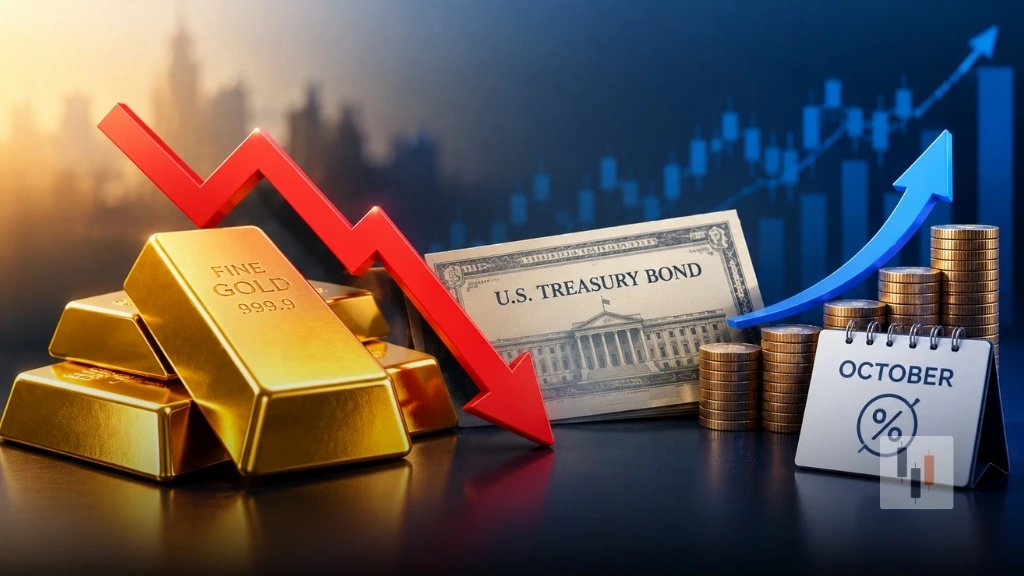
Gold prices dropped on Tuesday as a stronger U.S. dollar and higher Treasury yields weighed on the metal. Spot gold was down 0.3% at $4,127.87 an ounce by 0620 GMT, while U.S. gold futures were little changed at $4,155.30. The move comes as traders reassess the outlook for U.S. interest rates following weaker employment data.
Expectations for another Federal Reserve rate increase in October have eased, giving gold some support and keeping the decline relatively limited. At the same time, higher Treasury yields have made holding non-interest-bearing assets less attractive. Investors are now waiting for the minutes from the Fed’s September meeting, along with further economic data, for clues about where rates could go next. According to analysts, the dollar’s performance and the bond market are also likely to remain important for gold prices in the near term.
Firmer Dollar And Higher Yields Weigh On Gold
The dollar and U.S. bond market were the main sources of pressure on gold during Tuesday’s trading session. Reuters’ report put spot gold at $4,152.04 an ounce, down 0.3%. A stronger dollar can weigh on gold because the metal is priced in the U.S. currency. When the dollar rises, buyers using other currencies effectively pay more for the same amount of gold. This can make demand softer at the margin.
Treasury yields have also been moving higher. The 10-year and 30-year U.S. Treasury yields recently reached their highest levels in more than two decades, putting another source of pressure on gold. The reason is fairly simple. Gold does not pay interest, while government bonds do. When bond yields rise, investors have more income available from holding those assets, which can make gold comparatively less appealing.
Still, gold has not simply followed yields lower. A recent market analysis pointed to continued central-bank buying and geopolitical concerns as factors that have helped keep demand for the metal firm despite the rise in bond yields.
That has also been discussed by gold investors on Reddit, where users have been debating how much influence higher yields should have on the metal’s price. The discussion is useful context because gold’s recent performance has not followed the traditional relationship with yields in a straightforward way. The weakness has extended to other precious metals as well. Spot silver, platinum and palladium were each down 0.7% during Tuesday’s session. Currency markets have also added to the pressure.
For gold, the result is a market being pulled in different directions. Higher yields and a stronger dollar are weighing on prices, but expectations around U.S. monetary policy and continued demand for the metal are providing some offset.
Weaker Jobs Data Changes The Fed Rate Outlook
The other side of the gold trade is the Federal Reserve. Expectations for an October rate increase have fallen after the latest U.S. employment figures showed a weaker labor market than previously expected. The Bureau of Labor Statistics said U.S. nonfarm payroll employment increased by 29,000 in September. The unemployment rate stood at 4.2%, while payroll figures for July and August were revised down by a combined 60,000.
The figures gave markets less reason to expect the Fed to keep raising rates immediately. This is important for gold because expectations of lower or slower interest rates can reduce some of the pressure created by higher-yielding assets. The Fed raised its target range by 25 basis points at its September meeting, taking it to 3.75%-4%. In its September statement, the central bank said economic activity had continued to expand at a solid pace but also acknowledged that inflation remained elevated.
Market pricing still points to a possible rate increase later in the year. The CME FedWatch Tool showed traders continuing to assign a high probability to a December increase, even as expectations for October have weakened. Inflation remains part of the picture. Recent services-sector data showed slower activity, but prices paid by businesses for inputs rose to their highest level in more than four years. This leaves the Fed with a mix of weaker employment conditions and inflation that has not fully returned to its target.
Gold’s next move will therefore depend on how those factors develop. A stronger dollar and higher yields could keep pressure on the metal, while weaker economic data or a change in expectations for Fed policy could provide support. Geopolitical risks are another factor traders continue to watch, particularly developments in the Middle East. For now, though, the immediate focus remains on U.S. rates, Treasury yields and the dollar as investors wait for the Fed minutes and the next round of economic figures.